Breakthrough Research from VinUniversity Featured in the World’s Top Materials Science Journal – Advanced Materials
June 30, 2026


A new path of research opens up the possibility for clothing to process information, learn, and react in real time.
HANOI, VIETNAM – A pioneering team of researchers in the field of smart fibers from Columbia University (USA), Nanyang Technological University (Singapore), Delft University of Technology (Netherlands), EPFL (Switzerland), and the lead author from VinUniversity have published a comprehensive, landmark review in the prestigious scientific journal Advanced Materials, the world’s top-ranked journal in Materials Science according to Google Scholar metrics. The paper is titled “Weaving Intelligence: Thermally Drawn Multimaterial Fibers Towards AI-Integrated Textiles.” This is a major academic milestone for Vietnam, marking the first time in the history of Advanced Materials that both the first author and the submitting author are from Vietnam.
A Roadmap for “Brain-Like” Fibers, Beyond Ordinary Threads
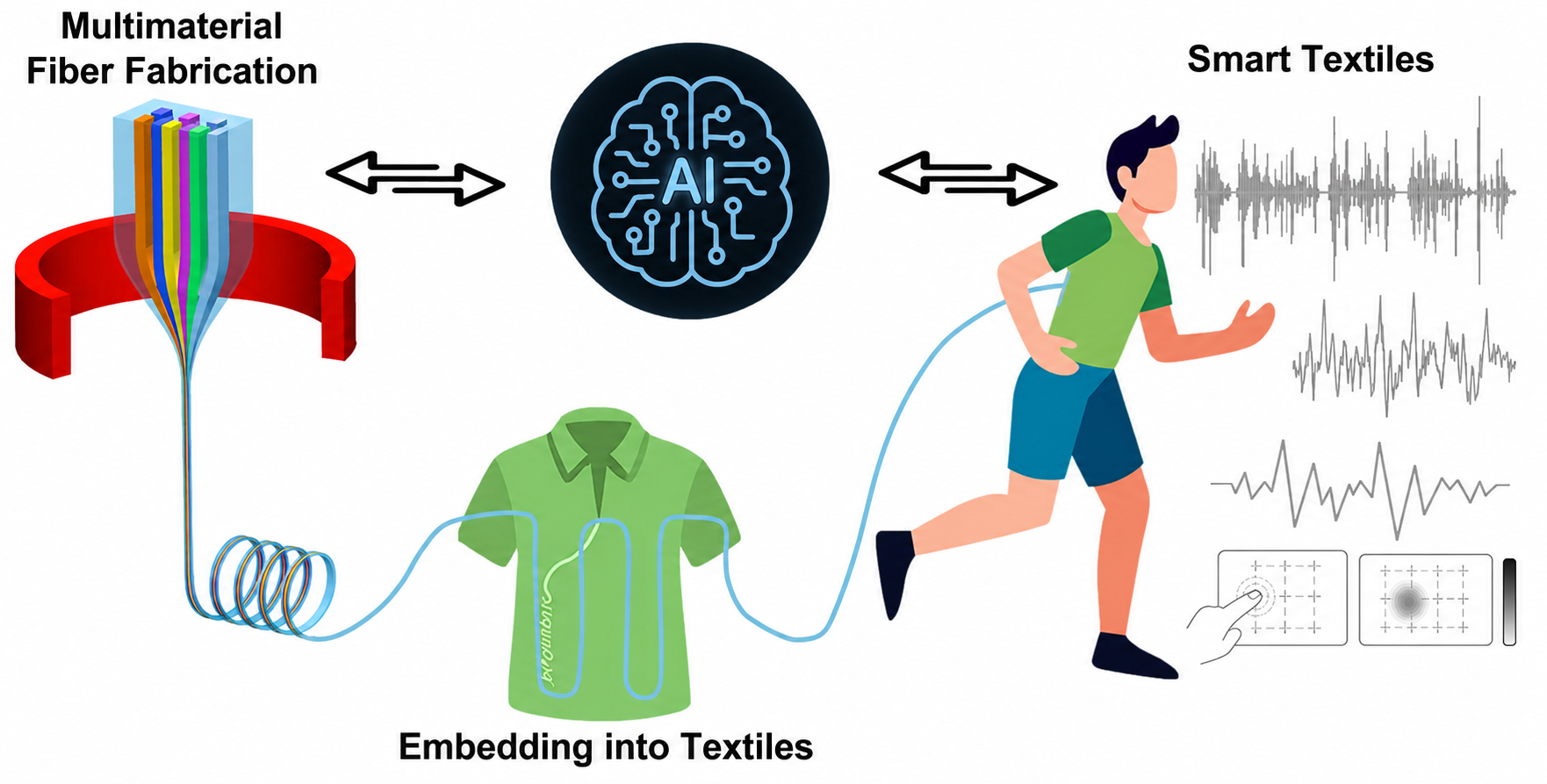
This publication serves as a comprehensive review of the latest global advancements at the intersection of fiber manufacturing and Artificial Intelligence (AI). The authors thoroughly evaluate how a production technique known as “thermal drawing” is being utilized to weave metals, semiconductors, and polymers into continuous, kilometer-long micro-fibers.
Notably, the review details how these high-tech fibers are paving the way for advanced AI systems capable of operating directly within clothing in everyday life. Furthermore, the team assesses that fibers and fabrics will play a critical role in the future of AI, specifically the development of Spiking Neural Networks (SNNs) – an AI architecture that mimics human brain functions. The authors emphasize that integrating SNNs into fabrics allows clothing to autonomously process information, learn, and react in real-time with extremely low power consumption, thereby transforming garments into distributed, self-aware computing systems.
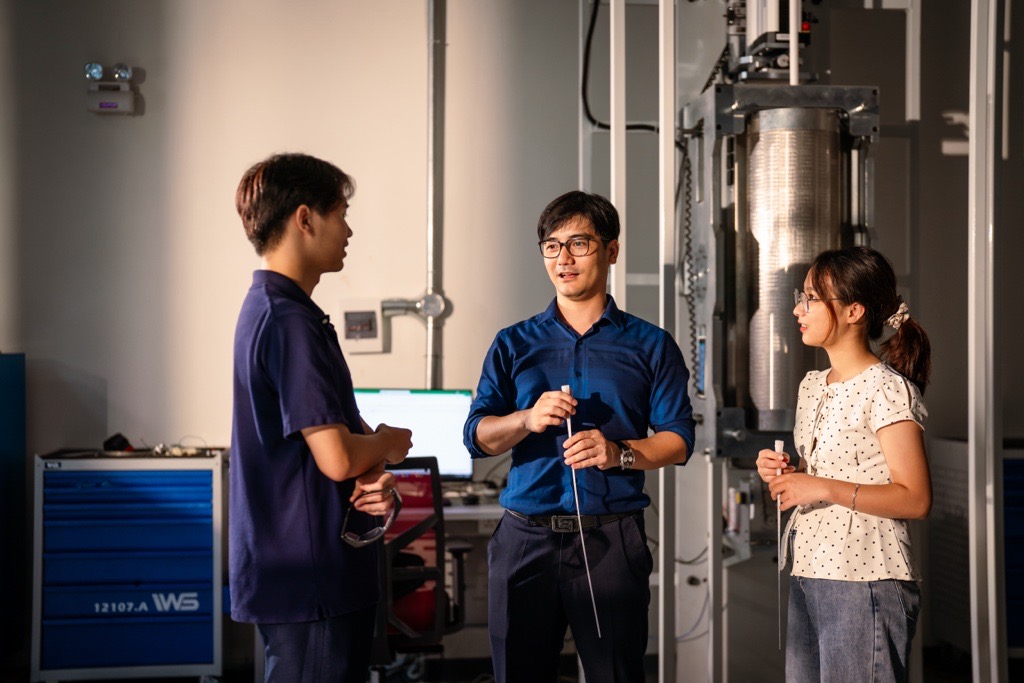
“We have comprehensively mapped out the evolution of thermally drawn fibers beyond the limitations of passive materials,” shared lead author Vuong Dinh Trung from VinUniversity. “This paper depicts a complete technological shift from traditional fabrics to self-optimizing and adaptive textile systems.”
High-Tech Economic Transformation Opportunities for Vietnam
The review notes that the global smart textile market is projected to surge from $2.98 billion in 2022 to over $8.5 billion by 2028. For Vietnam, where 16% of GDP comes from textile, fiber, and garment technology, and 10% of the workforce is employed in this sector, the convergence of AI and fabric manufacturing technology represents a tremendous economic opportunity. Transitioning from passive fabrics to third-generation “smart textiles” could help Vietnam’s established manufacturing sector become a high-tech leader in the smart textile device market. Dr. Nguyen Dang Tung, Director of Career Services and Corporate Partnerships, a lecturer at VinUniversity, and the lead corresponding author of the report, added: “Facing the challenge of traditional fiber technology shifting to countries with cheaper labor costs, integrating embedded AI to create advanced fiber products could have a profound impact on the economy. This is also a major opportunity for Vietnam to develop core technologies domestically, positioning the nation as a pioneer in advanced materials during the country’s era of rising.”
Read the full research here: https://advanced.onlinelibrary.wiley.com/doi/10.1002/adma.73574